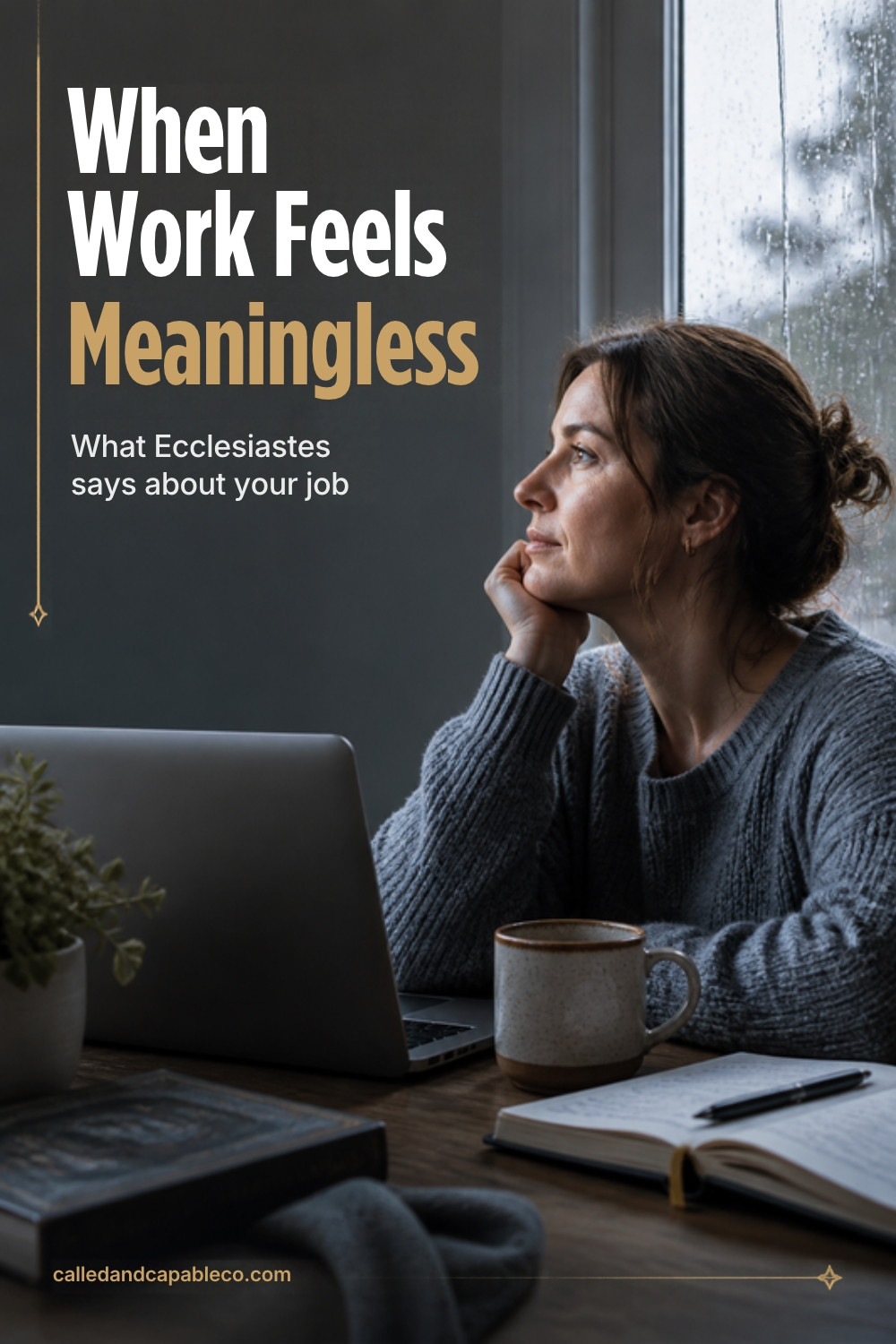
Have you ever finished a long day and wondered, "What was the point?" The emails will refill your inbox tomorrow. The house will get messy again tonight. The report you spent hours on may never be read. The project you worked so hard on may be forgotten in a year, or canceled next month.
If you've felt that, you're not alone, and you're not unspiritual. In fact, you're in good company. An entire book of the Bible wrestles with exactly this question: what's the point of all our work?
When work feels meaningless, Ecclesiastes is one of the most honest and helpful places to turn.
The honest book
Vanity of vanities, says the Preacher, vanity of vanities! All is vanity.
Ecclesiastes 1:2
The word "vanity" translates a Hebrew word, hebel, that means something like "breath," "vapor," or "mist." It describes things that are fleeting, hard to grasp, and quickly gone, like breath on a cold morning.
The Preacher, traditionally understood to be Solomon, looks at everything under the sun: work, wealth, pleasure, wisdom, achievement. And he's brutally honest. Under the sun, apart from God, none of it lasts.
What does man gain by all the toil at which he toils under the sun?
Ecclesiastes 1:3
He built houses, planted vineyards, made gardens, gathered wealth, and achieved more than anyone before him. And then:
Then I considered all that my hands had done and the toil I had expended in doing it, and behold, all was vanity and a striving after wind, and there was nothing to be gained under the sun.
Ecclesiastes 2:11
He even says he hated all his toil because he would have to leave it to someone who came after him, who might be a fool (Ecclesiastes 2:18–19).
It's surprising that this is in the Bible. But it's a gift. God doesn't ask us to pretend work is always fulfilling. He gives us words for our frustration.
The phrase "under the sun"
The key to understanding Ecclesiastes is the phrase "under the sun," which appears about thirty times. It describes life viewed from a purely earthly perspective, without reference to God and eternity.
Under the sun, work really does feel meaningless. We work, we die, and someone else takes over. Our achievements fade. Nothing seems to last.
But Ecclesiastes isn't the whole story. It's an honest examination of life apart from God, which drives us to look beyond the sun.
The turn toward joy
Ecclesiastes doesn't end in despair. Again and again, the Preacher returns to something surprising:
There is nothing better for a person than that he should eat and drink and find enjoyment in his toil. This also, I saw, is from the hand of God.
Ecclesiastes 2:24
He repeats this idea several times (Ecclesiastes 3:12–13, 5:18–19, 8:15, 9:7–10). Enjoyment in your work is not something you can force or achieve. It's a gift from the hand of God.
The same work that feels meaningless when we try to find ultimate significance in it can become a source of real joy when we receive it as a gift. A good meal, a task done well, a kind coworker, a problem solved, a paycheck that feeds your family: these are gifts from God's hand.
Work isn't your ultimate meaning
Here's the key insight: work can't carry the weight of being your ultimate meaning. When we look to our jobs to give us identity, legacy, significance, or worth, they will always disappoint us. They're vapor.
This is especially important in a culture that tells us to find our purpose in our careers. "Do what you love and you'll never work a day in your life." "Find your passion." "Make your mark." Those messages put enormous pressure on work to be something it was never meant to be.
But when God is our ultimate meaning, work can take its proper place: a good gift to enjoy, a way to serve others and provide for our families, and a calling to be faithful in. Work becomes lighter when it doesn't have to be everything.
The end of the matter
The Preacher concludes the whole book with this:
The end of the matter; all has been heard. Fear God and keep his commandments, for this is the whole duty of man.
Ecclesiastes 12:13
The meaning of life isn't found in what we produce or accomplish. It's found in knowing, honoring, and obeying God. That's what gives everything else its proper place.
In the Lord, not in vain
The New Testament adds even more hope to Ecclesiastes. Because Christ rose from the dead, the futility of this world isn't the final word. Paul ends his great chapter on the resurrection this way:
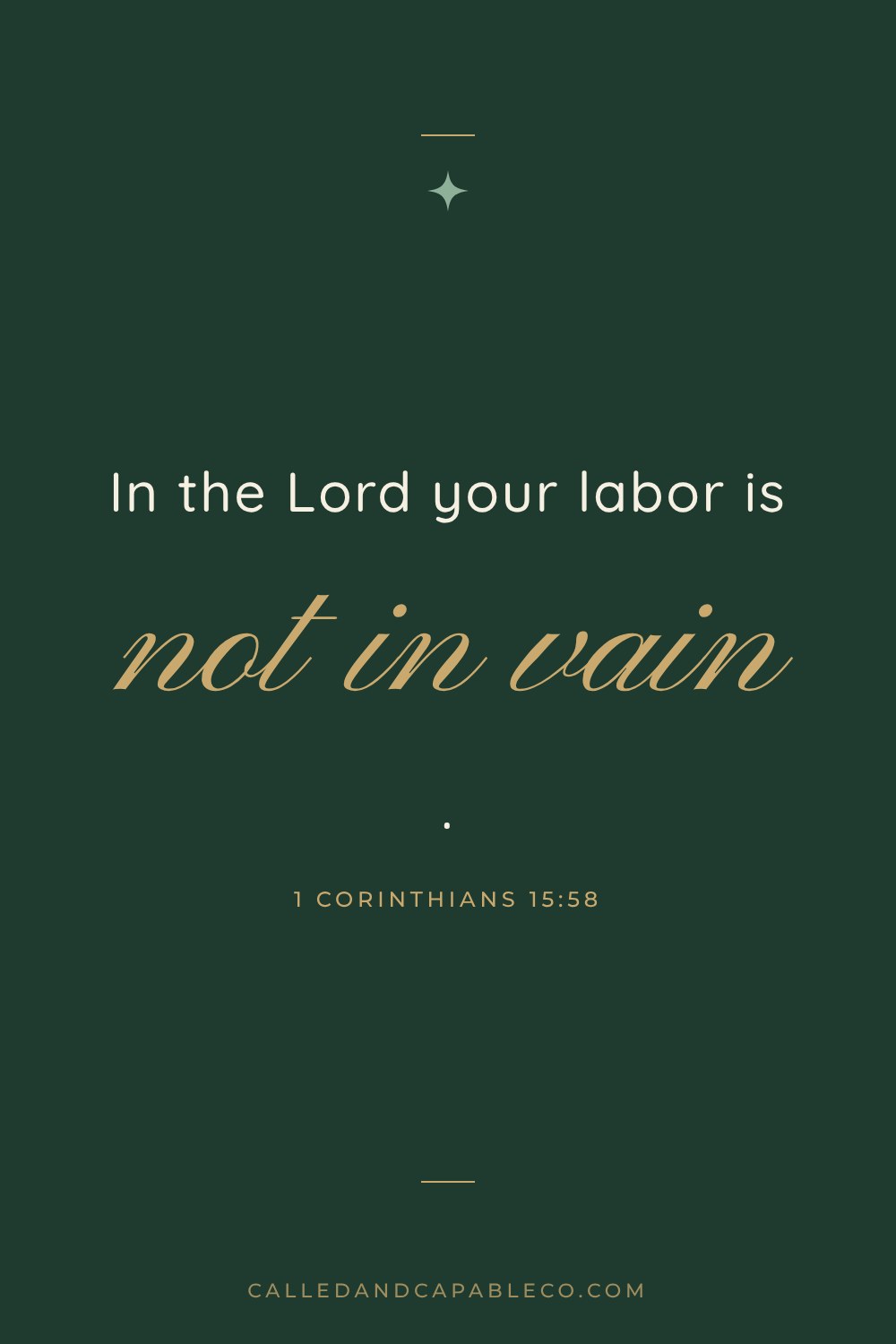
Therefore, my beloved brothers, be steadfast, immovable, always abounding in the work of the Lord, knowing that in the Lord your labor is not in vain.
1 Corinthians 15:58
Under the sun, work can feel like vapor. In the Lord, it's never wasted. Faithful work done for Christ has eternal significance, even when it seems small or unnoticed now.
For your next meaningless day
Here are a few practical ways to apply Ecclesiastes when your work feels pointless:
- Receive small joys. A good cup of coffee, a kind coworker, a job done well, a lunch break in the sunshine. These are gifts from God's hand. Notice them and thank him.
- Let go of ultimate expectations. Your job doesn't need to be your whole purpose. It's one part of a faithful life.
- Fear God. Keep your eyes on him, not on your output or your legacy.
- Do the work in front of you. "Whatever your hand finds to do, do it with your might" (Ecclesiastes 9:10).
- Remember the resurrection. In Christ, your faithful work matters forever.
- Talk to someone. If meaninglessness at work is persistent and heavy, talk with a trusted friend, pastor, or counselor. Sometimes it's a sign of burnout or a need for change.
Is it time for a change?
Sometimes feeling that your work is meaningless is simply part of life in a fallen world. Other times, it may signal that your current role isn't a good fit for your gifts or season. It's okay to prayerfully consider a change. Seek wise counsel, pray, and trust God to guide you.
The Called & Capable Monthly membership, launching January 2027, brings one new 4-week Bible study to your inbox each month, about twelve minutes a day, with a Monday encouragement email and a weekly Reflection Guide. In the meantime, our free Monday Reset study is a great place to start.
Common questions
What does Ecclesiastes say about work?
Ecclesiastes admits that work apart from God feels fleeting and frustrating, but it repeatedly says that enjoying your work, food, and life is a gift from God (Ecclesiastes 2:24, 3:13, 5:18).
What should a Christian do when their job feels pointless?
Receive small joys as gifts, stop expecting your job to be your ultimate meaning, fear God, and remember that in Christ your labor is not in vain (1 Corinthians 15:58). If the feeling persists, consider whether a change is wise.
Scripture quotations are from the ESV® Bible (The Holy Bible, English Standard Version®), © 2001 by Crossway, a publishing ministry of Good News Publishers. Used by permission. All rights reserved.