In the book of Ruth, Boaz is the wealthy landowner who notices Ruth gleaning in his field. He's often remembered as the romantic hero of the story, the man who marries Ruth and redeems her family's land.
But before he's a husband, Boaz is a boss. He owns fields, manages workers, and makes business decisions during the busiest season of the year: harvest. And his example has a lot to say about biblical leadership at work, whether you manage a large team, run a small business, supervise a few people, or simply want to be a better coworker.
Let's look at Ruth 2 and see how Boaz led.
He greeted his workers with blessing
And behold, Boaz came from Bethlehem. And he said to the reapers, "The LORD be with you!" And they answered, "The LORD bless you."
Ruth 2:4
The very first thing we see Boaz do is bless his workers. He doesn't walk in barking orders, checking productivity, or complaining about the pace. He greets them in the Lord's name, and they bless him in return.
That small exchange tells us a lot about the culture in his fields. There was mutual respect. There was a shared faith. There was warmth between the owner and the workers.
What's the culture in your workplace like? Whether you lead a team or not, your words can set the tone. A kind greeting, a sincere thank-you, or an encouraging word at the start of a meeting can shape the atmosphere for everyone.
He noticed the overlooked person
When Boaz arrived, he noticed someone new: a young woman gleaning at the edges of his field. He asked his foreman, "Whose young woman is this?" (Ruth 2:5).
Ruth was a foreign widow doing the lowest-status work in the field. Most people would have walked right past her. Boaz didn't. He asked about her, learned her story, and spoke to her directly.
Every workplace has overlooked people: the new hire, the quiet coworker, the cleaning crew, the temp, the person who never speaks up in meetings, the employee going through something hard at home. Kindness often starts with simply noticing.
Ask yourself: who in my workplace is easy to overlook? How could I see them this week?
He went beyond what was required
The law of Moses required landowners to leave the edges of their fields and any dropped grain for the poor (Leviticus 19:9–10). Boaz did that, and then went much further:
- He told Ruth to stay in his fields rather than going elsewhere (Ruth 2:8).
- He told her to drink from the water his workers had drawn (Ruth 2:9).
- He invited her to eat with his workers at mealtime and personally served her roasted grain, more than she could eat (Ruth 2:14).
- He quietly told his men to let her glean among the sheaves and even to pull out extra stalks for her to pick up (Ruth 2:15–16).
Boaz didn't just do the minimum the law required. He was generous, and he was generous in a way that preserved Ruth's dignity. She still worked. But he made sure her work would be fruitful.
In your workplace, generosity might look like sharing credit, training someone well, giving extra help on a hard project, being flexible with a struggling employee, or advocating for fair pay and good conditions.
He protected the vulnerable
Have I not charged the young men not to touch you?
Ruth 2:9
Boaz also used his authority to protect Ruth. As a young, foreign, unprotected woman working in the fields, she was vulnerable to harassment or worse. Boaz made sure his workers knew she was off-limits.
Leaders have power. Godly leaders use it to protect and serve others, not to exploit them. This is especially important in workplaces today. Speaking up when someone is being mistreated, creating clear standards of respect, and taking concerns seriously are all ways to follow Boaz's example.
He spoke words of honor and faith
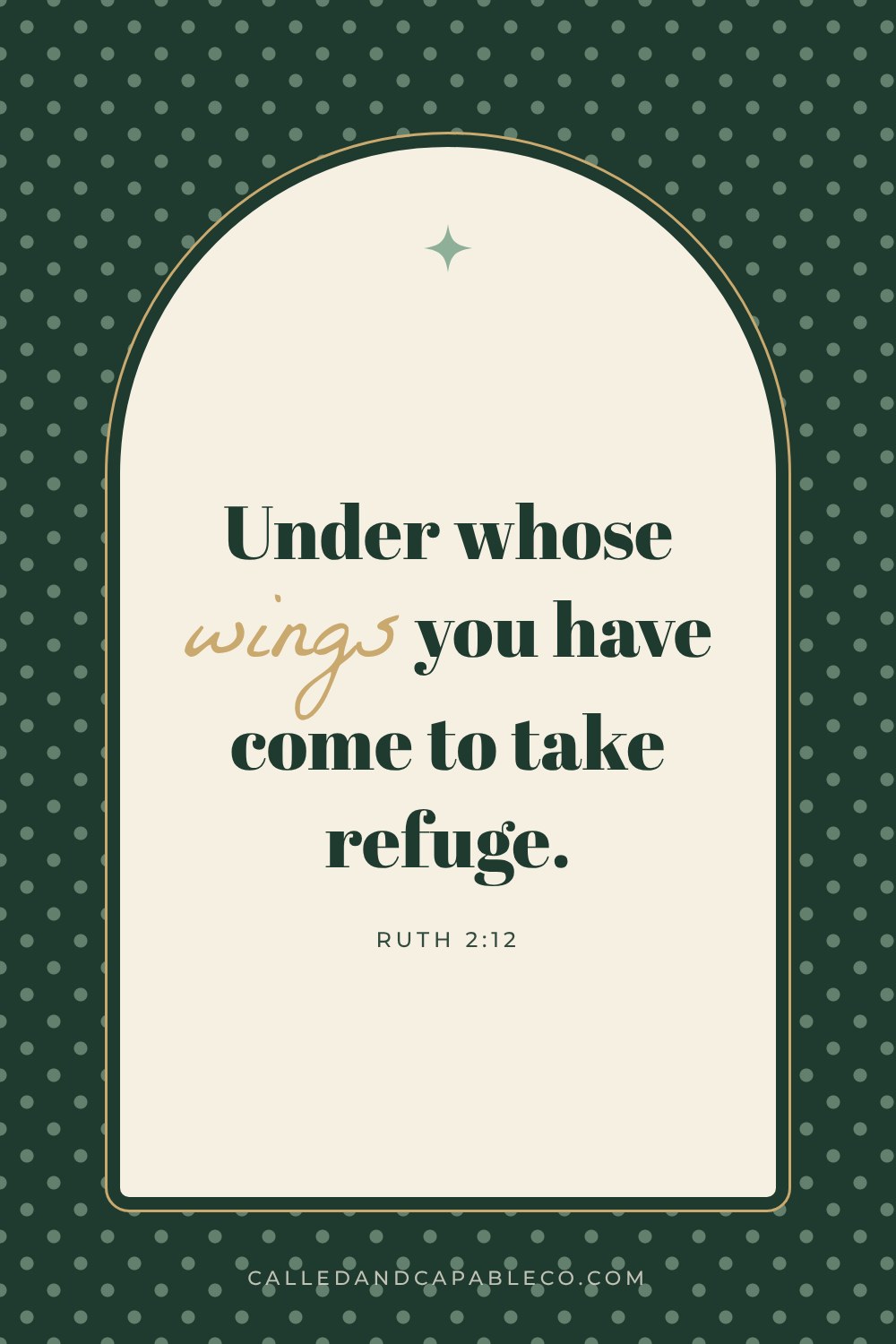
When Ruth asked why he was being so kind, Boaz explained that he'd heard about her loyalty to Naomi. Then he blessed her:
The LORD repay you for what you have done, and a full reward be given you by the LORD, the God of Israel, under whose wings you have come to take refuge!
Ruth 2:12
Boaz praised Ruth's character specifically. He noticed what she'd done and named it. And he pointed her to God as her ultimate refuge and reward.
Specific, sincere praise is a powerful leadership tool. "Thanks for your hard work" is nice. "The way you handled that difficult client yesterday was patient and wise" is far more meaningful.
He acted with integrity
Later in the story, when Boaz has the opportunity to marry Ruth, he does everything properly. There was another relative with a closer claim. Instead of cutting corners, Boaz went to the city gate, gathered witnesses, and handled the matter openly and legally (Ruth 4:1–10).
Boaz's kindness was matched by integrity. He did the right thing in the right way, even when a shortcut might have been easier.
How to be a "Boaz" at work
Here are some practical ways to follow Boaz's example:
- Bless people with your words. Start meetings with genuine warmth. Thank people specifically and sincerely.
- Notice the overlooked. Learn names. Ask questions. Include people who are often left out.
- Be generous beyond the minimum. Share credit. Offer help. Train others well. Advocate for your team.
- Protect the vulnerable. Speak up when someone is being mistreated. Create a culture where people feel safe.
- Act with integrity. Do the right thing in the right way, even when no one is watching.
- Point to God. Your kindness and integrity can open doors for gospel conversations.
A picture of our Redeemer
Ultimately, Boaz points us beyond himself. He's a kinsman-redeemer, a relative who paid the price to buy back what was lost. He's a picture of the greater Redeemer who would come from his family line: Jesus Christ.
Jesus noticed us when we were outsiders. He provided for us far beyond what we deserved. He protected us. He paid the price to redeem us. And he brought us under his wings.
For even the Son of Man came not to be served but to serve, and to give his life as a ransom for many.
Mark 10:45
The best leadership at work flows from having been served by Christ first.
Our study Ruth: Faithful in the Field explores Boaz, Ruth, and God's providence over four weeks, one chapter at a time, about twelve minutes a day, written for working women. It's $10 as an instant download.
Common questions
Who was Boaz in the Bible?
Boaz was a wealthy landowner in Bethlehem and a relative of Naomi's late husband. He showed kindness to Ruth, acted as her kinsman-redeemer, married her, and became an ancestor of King David and Jesus.
What does the Bible say about leadership at work?
Biblical leadership serves others. Boaz blessed his workers, noticed the overlooked, was generous, protected the vulnerable, and honored God, and Jesus taught that the greatest leaders serve (Mark 10:43–45).
Scripture quotations are from the ESV® Bible (The Holy Bible, English Standard Version®), © 2001 by Crossway, a publishing ministry of Good News Publishers. Used by permission. All rights reserved.