January is full of good intentions, especially when it comes to Bible reading. Many of us start a read-through-the-Bible-in-a-year plan with real excitement. Genesis is great. Exodus is gripping. Then we hit Leviticus, a busy work season, a family illness, or a few late nights, and by mid-February we're two weeks behind. Quietly, we give up and feel guilty about it until next January.
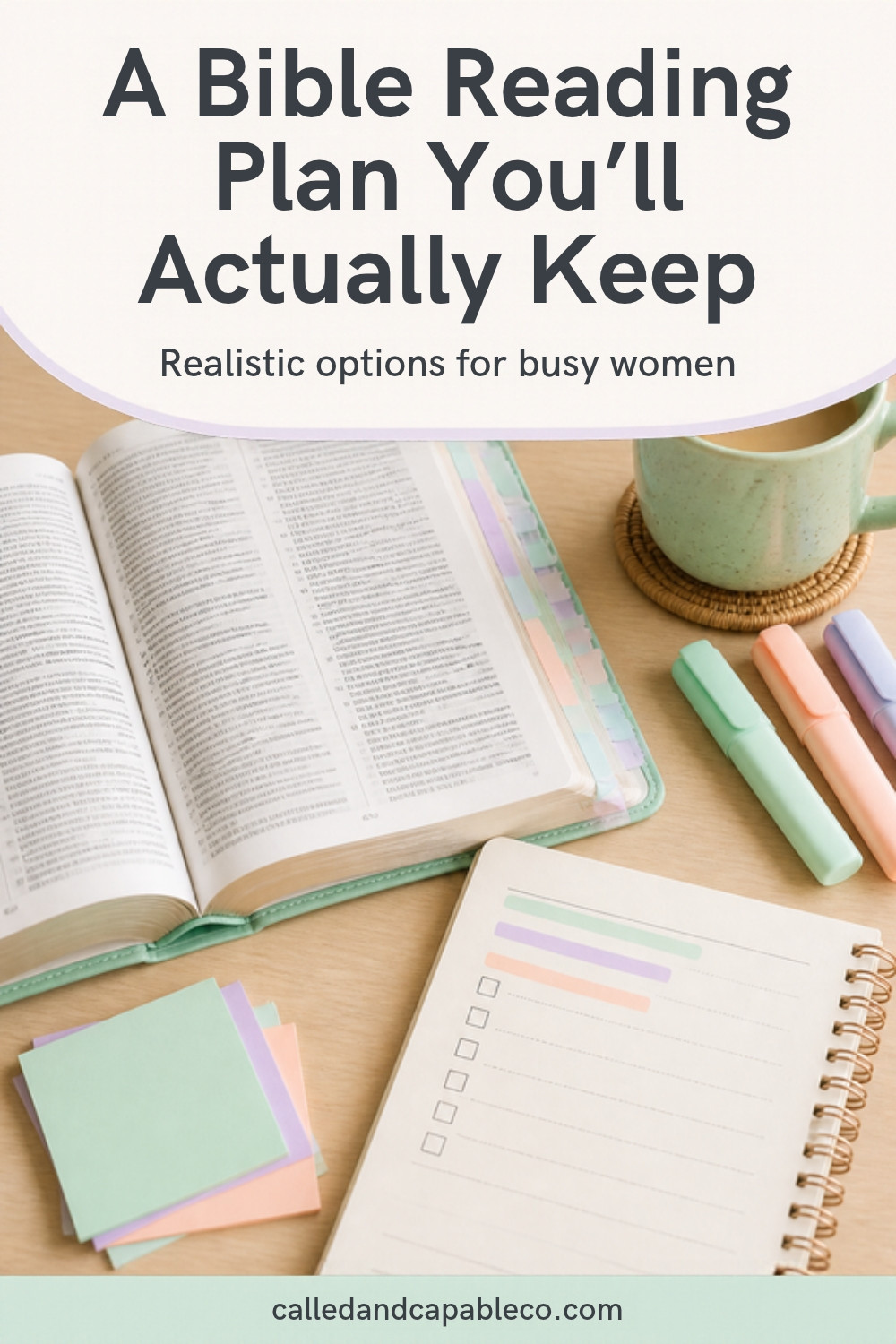
If that sounds familiar, you don't need more willpower. You probably need a more realistic Bible reading plan for busy women, one that fits your actual life.
Here's how to choose a plan you'll actually keep.
Why Bible reading matters
Before we get practical, it's worth remembering why this matters. Reading Scripture isn't a box to check or a way to earn God's favor. It's how God speaks to us, shapes us, and draws us closer to himself.
All Scripture is breathed out by God and profitable for teaching, for reproof, for correction, and for training in righteousness, that the man of God may be complete, equipped for every good work.
2 Timothy 3:16–17
God's Word equips you for every good work, including the work you do at your job, in your home, and in your church. That's worth making room for.
Ask what season you're in
A plan that works for a retiree with quiet mornings may not work for a mom of toddlers with a full-time job. A plan that worked for you in college may not fit your life now. Be honest about your current season:
- How much time do I realistically have on most days? Five minutes? Fifteen? Thirty?
- When is my best time to read? Early morning, lunch, evening?
- Do I want depth (fewer passages, more reflection) or breadth (more chapters, covering more ground)?
- Do I do better with structure or flexibility?
There's no wrong answer. Both breadth and depth are valuable. Different seasons call for different approaches.
Option 1: One book at a time
Choose one book of the Bible and read a small section each day until you finish it. Then choose another.
This approach is flexible and great for depth. You can slow down when a passage is rich and move faster when it's narrative. You never "fall behind," because there's no schedule to keep up with.
Good books to start with:
- Mark: short, fast-paced, focused on Jesus
- John: rich and reflective
- Philippians: joy and contentment
- James: practical faith
- Ruth: God's providence in ordinary life
- Psalms: one a day for prayer and worship
Option 2: A five-day plan
Many reading plans assume you'll read every single day. That's a setup for discouragement when life inevitably gets in the way.
Instead, choose a plan with five readings per week. That builds in two days of grace for busy weekends, sick kids, travel, or catching up. Many working women find that Monday through Friday readings fit naturally into their workweek routine, with the Lord's Day set apart for worship with their church.
Option 3: The whole Bible in two years
Reading the entire Bible in one year is a wonderful goal, but it takes about 15 to 20 minutes a day, every day. Spreading it over two years cuts that in half and still gets you through all of Scripture.
There's no prize for speed. Reading the whole Bible over two years with understanding is better than rushing through it in one year without it, or quitting in March.
Option 4: Listen
An audio Bible is a wonderful option for busy women. You can listen during your commute, while working out, folding laundry, or cooking dinner.
Some people feel like listening doesn't "count." But for most of history, God's Word was heard aloud, not read privately. Most early Christians heard Scripture read in worship. Paul told Timothy to "devote yourself to the public reading of Scripture" (1 Timothy 4:13). Listening still counts.
You might combine options: listen to longer narrative books during your commute and read shorter passages more slowly in your quiet time.
Pair your plan with a simple practice
Whatever plan you choose, add one small habit to help the reading sink in rather than just pass through:
- Underline one verse each day.
- Write one sentence about what you learned.
- Pray one line back to God.
- Choose one phrase to carry into your day.
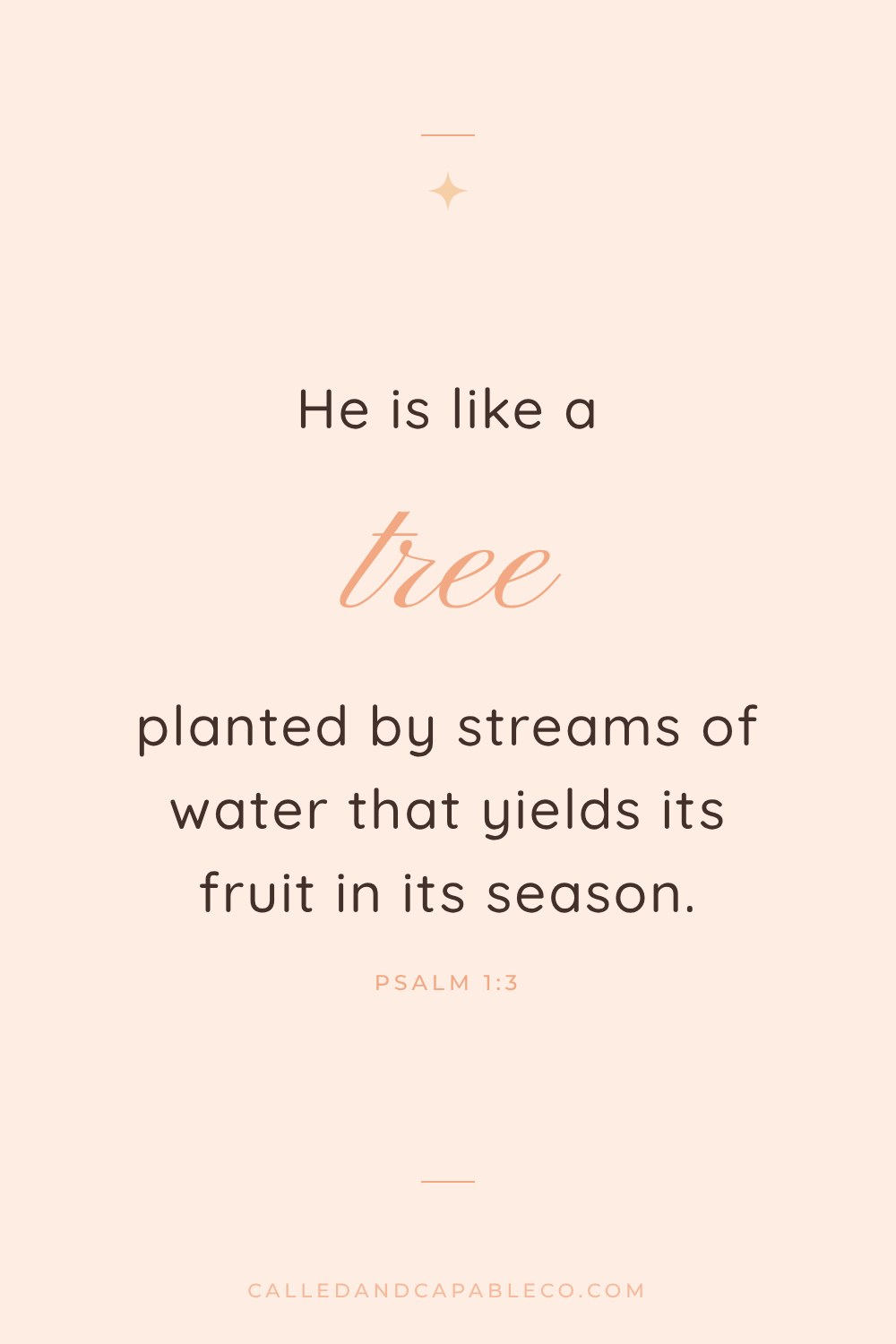
Blessed is the man who walks not in the counsel of the wicked... but his delight is in the law of the LORD, and on his law he meditates day and night. He is like a tree planted by streams of water that yields its fruit in its season.
Psalm 1:1–3
The goal isn't to finish a checklist. It's to be like that tree, rooted near the water, steadily drinking and growing.
Remove the friction
Small obstacles derail good habits. Set yourself up for success:
- Keep your Bible in one place, ready to go, with a pen and notebook.
- Decide the night before what you'll read.
- Turn off notifications if you read on your phone.
- Tie it to a habit you already have, like your morning coffee.
- Invite a friend to follow the same plan and check in weekly.
When you fall behind
You will fall behind at some point. When you do, don't try to catch up on everything you missed. That usually leads to discouragement. Just skip ahead to today's reading and keep going. Or start over with a smaller plan.
God's Word isn't going anywhere. And your standing with God doesn't depend on your reading streak. You read because you're loved, not to become loved.
Start where you are
The best Bible reading plan isn't the most impressive one. It's the one you'll actually follow, in the season you're actually in. Start small, stay steady, and trust God to use his Word in your life.
Our study Fruitful: Planning Your Year in God's Word walks through what Scripture says about fruitfulness, planning, and goals over four weeks, about twelve minutes a day. It starts with abiding in Christ before it ever gets to goals, and includes printable pages for your word of the year, goals for each area of life, and quarterly check-ins. It's $10.
Common questions
How long does it take to read the Bible in a year?
Reading the whole Bible in one year takes about 15 to 20 minutes a day. A two-year plan cuts that roughly in half.
What's the best Bible reading plan for beginners?
Many beginners do well reading one short book at a time, such as Mark, Philippians, or James, a few paragraphs a day. A five-day-a-week plan also builds in grace for busy weekends.
Scripture quotations are from the ESV® Bible (The Holy Bible, English Standard Version®), © 2001 by Crossway, a publishing ministry of Good News Publishers. Used by permission. All rights reserved.