Many of us were taught that the best quiet time happens first thing in the morning, before the sun comes up, with a hot cup of coffee and a quiet house. And for some women, that's exactly what works.
But if your mornings are a blur of alarm clocks, breakfast, lunches, permission slips, traffic, and a commute, an early morning quiet time may not be realistic right now. You might wake up exhausted, read the same verse three times, and still not remember it.
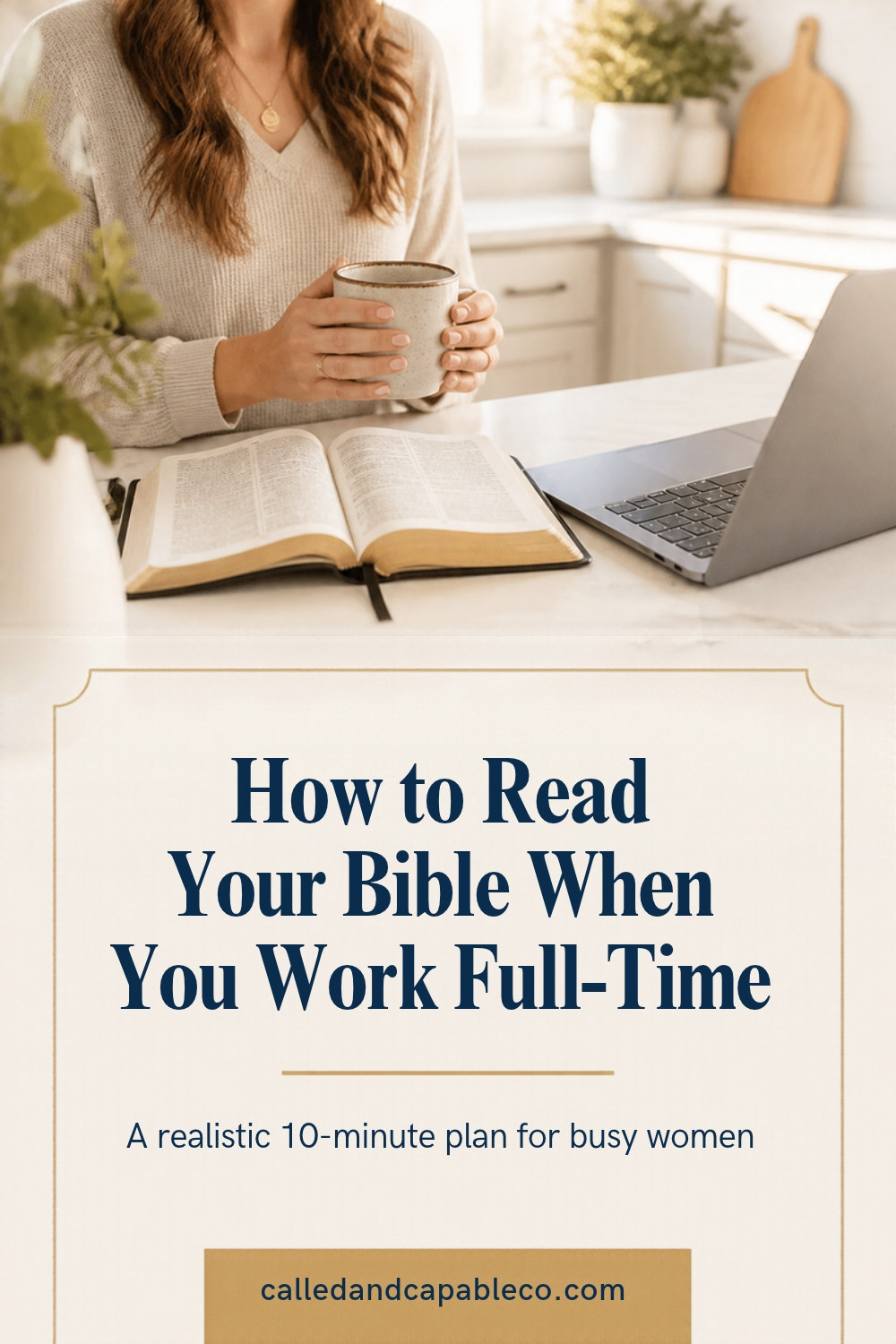
If that's you, here's good news: there's no command in Scripture about what time of day you meet with God. If your lunch break is the quietest part of your day, use it. Here are some practical quiet time ideas for working women, including a simple fifteen-minute plan for your lunch hour.
Why the middle of the day can be a gift
A midday quiet time has some real advantages:
- You're awake. No more reading the same verse three times because your eyes are closing. Your mind is alert and ready to engage.
- You need it. By noon, you've probably faced some stress, a hard email, a tense meeting, or a frustrating problem. Scripture meets you right in the middle of it.
- It resets the afternoon. You go back to work with a refreshed perspective, a calmer heart, and a reminder of who you're working for.
- It's often more consistent. For many working women, lunch happens every workday, while early mornings vary.
People in Scripture prayed at many different times of day. Daniel prayed three times a day, including midday (Daniel 6:10). The psalmist wrote:
Evening and morning and at noon I utter my complaint and moan, and he hears my voice.
Psalm 55:17
Peter went up on a housetop to pray "about the sixth hour" (Acts 10:9), which was around noon. Meeting with God in the middle of the day has a long, faithful history.
A simple 15-minute plan
Here's how a lunch break quiet time might look:
Minutes 1–2: Get away. Go to your car, a quiet corner, an empty conference room, a bench outside, or even a less-used break room. Put your phone on do not disturb. Take a deep breath. Ask God to speak to you through his Word.
Minutes 3–8: Read. Read one short passage, a paragraph or two, or a single psalm. Read it slowly, then read it again. The second reading almost always shows you something new.
Minutes 9–11: Reflect. Ask a few simple questions: What does this show me about God? What does it show me about people or about myself? Is there a promise to trust or a command to obey?
Minutes 12–14: Pray. Talk to God about what you read. Then pray about your afternoon: the meeting at 2 p.m., the coworker who's struggling, the project that's behind, your family at home.
Minute 15: Carry. Pick one phrase from what you read to take with you back to work. Repeat it on your walk back to your desk.
Then eat your lunch. Or eat while you read. That's fine, too. There's no rule that quiet times have to be fasting times.

What to bring
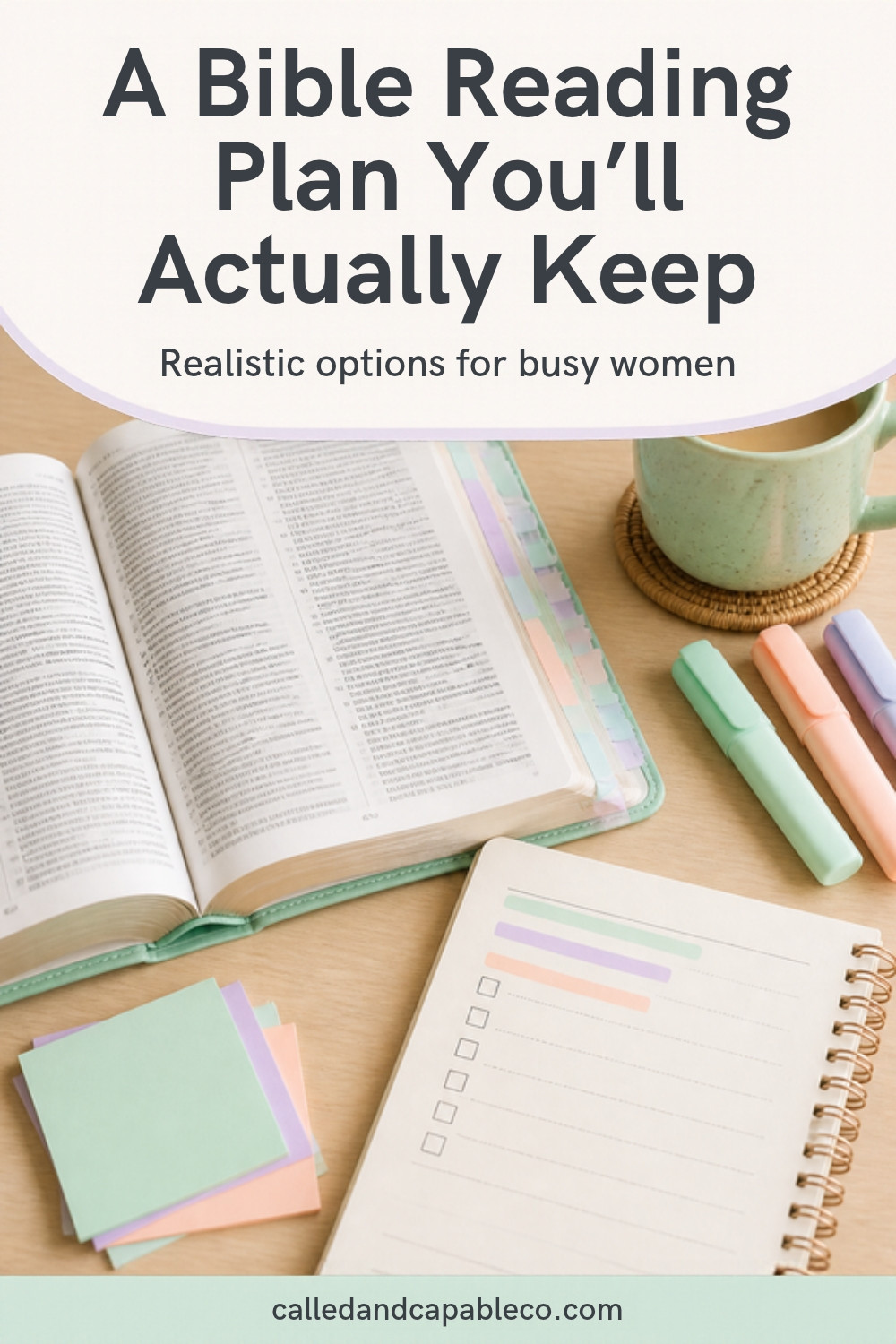
Having a few simple tools ready makes it much easier to follow through:
- A small Bible or a Bible app (with notifications turned off)
- A small notebook or index cards
- A pen
- A printed study or reading plan, if you're using one
Some women keep a "quiet time kit" in their work bag, desk drawer, or car so it's always ready. When you don't have to think about what to bring, you're more likely to actually do it.
Choose what to read ahead of time
One of the biggest time-wasters in a short quiet time is deciding what to read. Choose a book of the Bible and read through it a little each day, or follow a simple reading plan or study.
Good books for lunch-break reading:
- Psalms: one psalm a day for prayer and worship
- Proverbs: practical wisdom for work and relationships
- Mark: short, fast-moving, and focused on Jesus
- Philippians: joy in hard circumstances
- James: practical faith for everyday life
Guard the time
Lunch breaks can easily get swallowed by work. You eat at your desk while answering emails, or a meeting runs over, or someone stops by with a question.
Treat this time like an appointment. Put it on your calendar. If someone asks for a meeting during that time, it's okay to say you're unavailable. You'd protect a lunch meeting with a client. Your time with God deserves at least that much.
When you can't get away
Some days, you won't be able to step away. You may work in a job with short or unpredictable breaks, like nursing, teaching, retail, or customer service. That's okay.
Here are some alternatives for those days:
- Pray a verse silently at your desk or station.
- Listen to a chapter of an audio Bible on a short walk or in the car.
- Read one verse on your phone during a bathroom break.
- Pray through your afternoon while washing your hands.
Pick up again tomorrow. God isn't keeping score.
Invite a friend
If you have a Christian coworker, consider inviting her to join you once a week. Read the same passage and talk about it for a few minutes. Pray for each other. It can be a great encouragement in the middle of the workweek, and it builds friendship rooted in faith.
The heart of it
The point of a quiet time isn't to check a box or be a "good Christian." It's to meet with the God who loves you. Whether it happens at 5 a.m., noon, or 9 p.m., what matters is that you're coming to him, listening to his Word, and responding in prayer.
Oh, taste and see that the LORD is good! Blessed is the man who takes refuge in him!
Psalm 34:8
Our free Monday Reset study is perfect for a lunch-break quiet time. Each of the three days takes about ten minutes and includes a short reading, a reflection, one question, and one action for your workday. It's easy to print and keep in your work bag.
Common questions
Is it okay to have a quiet time in the afternoon instead of the morning?
Yes. Scripture doesn't command a specific time. Daniel prayed three times a day, and Psalm 55:17 mentions evening, morning, and noon. Choose the time you can be most consistent.
How long should a quiet time be?
Even 10 to 15 minutes is meaningful. Consistency matters more than length. A short daily time in God's Word adds up over weeks and months.
Scripture quotations are from the ESV® Bible (The Holy Bible, English Standard Version®), © 2001 by Crossway, a publishing ministry of Good News Publishers. Used by permission. All rights reserved.