Every January, the planners come out. Fresh pages, new pens, a word of the year, and big resolutions. We promise ourselves this will finally be the year we get organized, get healthy, grow our business, read more, and stay on top of everything.
By February, many of those plans have quietly faded.
Planning is good. But for Christians, Christian yearly planning should start in a different place than the world's version. It shouldn't begin with what we want to accomplish. It should begin with who God is, what he has already done, and what he has called us to.
If you've ever felt torn between wanting to plan well and wanting to trust God, this is for you. Here's a simple, prayer-centered way to plan your year as a Christian woman.
Is planning biblical?
Some Christians worry that planning shows a lack of faith, as if trusting God means taking life as it comes. But Scripture affirms wise planning again and again.
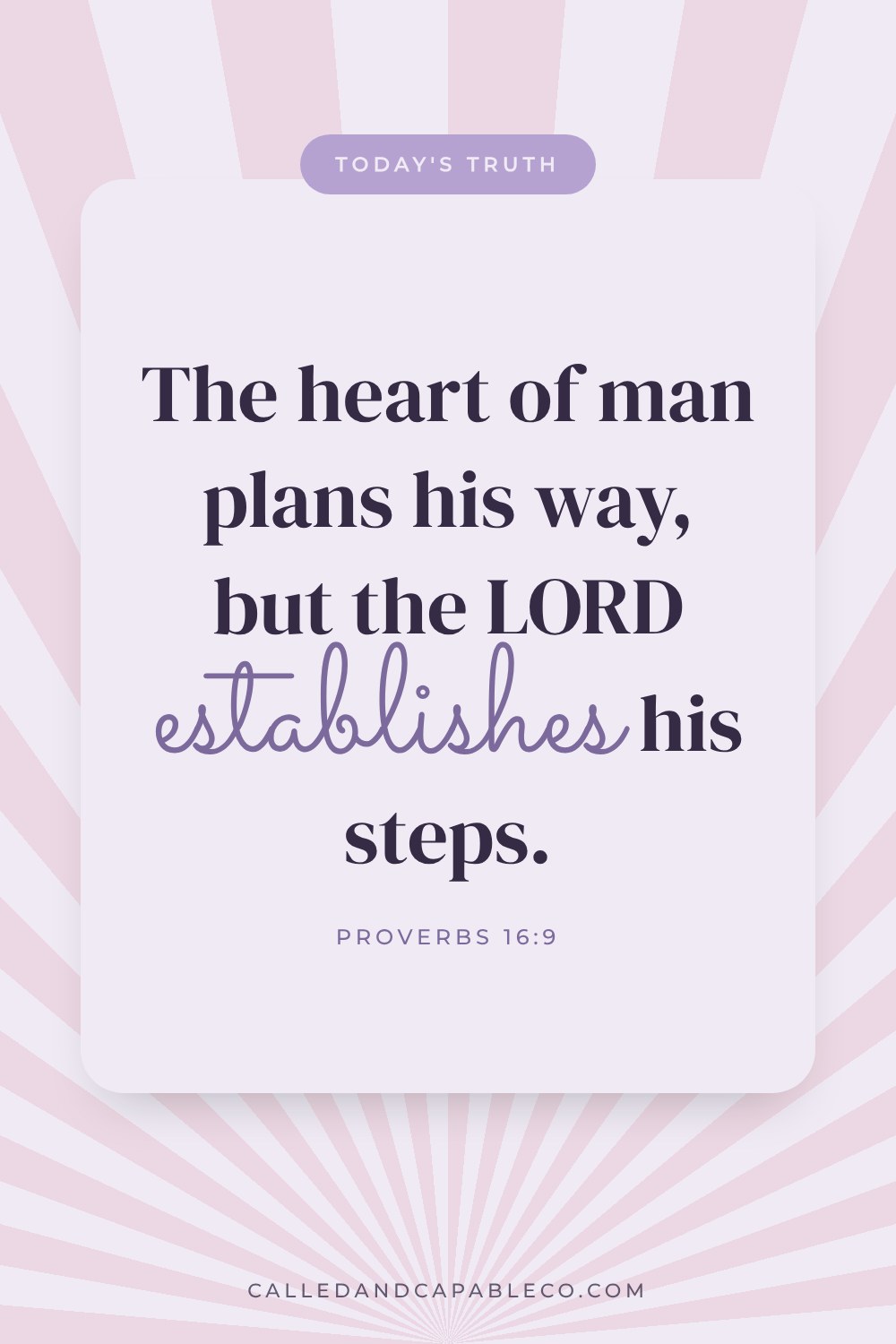
The heart of man plans his way, but the LORD establishes his steps.
Proverbs 16:9
Notice both parts of that verse. We plan. God establishes. Planning isn't the problem. Planning without God is.
Proverbs is full of praise for diligent planning. "The plans of the diligent lead surely to abundance" (Proverbs 21:5). Jesus himself talked about counting the cost before building a tower (Luke 14:28). Even the ant is praised for preparing its food in summer (Proverbs 6:6–8).
At the same time, James gives a sharp warning to business people who made plans without thinking of God:
Come now, you who say, "Today or tomorrow we will go into such and such a town and spend a year there and trade and make a profit"—yet you do not know what tomorrow will bring... Instead you ought to say, "If the Lord wills, we will live and do this or that."
James 4:13–15
James doesn't forbid planning a year of business. He forbids planning as if we were in control of the future. The difference is humility.
So yes, plan. But plan with your Bible open and your hands open.
Step 1: Look back with gratitude
Before you plan ahead, spend time looking back. This is one of the most overlooked steps in goal setting, and it's deeply biblical. Throughout Scripture, God's people are told to remember what he has done.
Grab a notebook and answer a few questions:
- Where did I see God's faithfulness this past year?
- What answered prayers can I name?
- What was hard, and how did he carry me through it?
- What did I learn, about him, about myself, about my work?
- What am I most thankful for?
Bless the LORD, O my soul, and forget not all his benefits.
Psalm 103:2
Gratitude humbles us. It reminds us that every good thing came from God's hand, not just our hard work. And it builds faith for the year ahead. If God was faithful last year, he will be faithful this year, too.
Step 2: Pray over your roles
Next, make a list of the main roles God has given you in this season. For example:
- Child of God
- Wife
- Mom
- Employee, leader, or business owner
- Daughter or caregiver
- Friend
- Church member
- Neighbor
Then pray over each role. Ask, "Lord, what does faithfulness look like here this year?"
This approach keeps your planning grounded in calling, not just ambition. It also helps you notice areas you might otherwise forget, like friendships or caring for aging parents, that don't show up on a typical goal list.
Step 3: Choose a few priorities, not twenty
It's tempting to set goals in every area of life at once: fitness, finances, career, faith, marriage, parenting, home organization, reading, hobbies. But most of us do better with three to five real priorities for the year.
Choose the ones that matter most in this season, and let the rest be "good enough." That's not laziness. It's wisdom. You're one person with limited time and energy.
A helpful question: "If only three things change this year, which three would make the biggest difference for God's glory and my family's good?"
Step 4: Make the next step concrete
Big priorities need small, specific next steps. "Grow in my faith" is a good desire, but it's vague. "Read through the Gospel of Mark in January, ten minutes a day before work" is something you can actually do.
For each priority, write:
- What faithfulness looks like this year
- The first step you'll take this month
- When and where you'll do it
Step 5: Commit your plans to the Lord
Commit your work to the LORD, and your plans will be established.
Proverbs 16:3
Once your plans are written, pray over them. Literally lay them before God. Ask him to bless what honors him and redirect what doesn't. Ask for wisdom, strength, and humility.
Then hold them loosely. Write your plans in pencil, so to speak. Some will go well. Some will change. Some will be interrupted by things you never saw coming: a new baby, a job change, an illness, a move, an opportunity. That's not failure. That's life under God's providence.
Step 6: Build in regular check-ins
Plans that are never revisited are quickly forgotten. Put a recurring time on your calendar, maybe the first Sunday afternoon of each month or a quiet morning at the start of each quarter, to look over your plans and pray through them again.
Ask:
- What's going well?
- Where have I drifted?
- What has changed in my season?
- What's the next small step?
These check-ins keep your priorities alive without becoming a source of pressure.
Keep the Lord's Day
One of the best things you can build into your yearly plan is a weekly rhythm of worship and rest. God built this into creation, working six days and resting on the seventh. Keeping the Lord's Day as a day of worship with your church and rest from ordinary work reminds you every week that the world doesn't depend on you. It's a built-in reset for your soul.
What about a word of the year?
Many women enjoy choosing a word of the year. That can be a helpful tool, as long as we understand what it is. Your word isn't a special message from God. He speaks to us through Scripture, which is complete and sufficient. A word of the year is simply a biblical theme you choose prayerfully to help you remember what you're pursuing, such as "abide," "faithful," or "rest," paired with a verse.
Plan from rest, not pressure
Ultimately, Christian planning is an act of trust. You plan because God gave you a life to steward. You hold your plans loosely because God is sovereign over your life. And you rest because your worth doesn't depend on how many goals you accomplish.
Our study Fruitful: Planning Your Year in God's Word walks through what Scripture says about fruitfulness, planning, and goals over four weeks, about twelve minutes a day. It starts with abiding in Christ before it ever gets to goals, and includes printable pages for your word of the year, goals for each area of life, and quarterly check-ins. It's $10.
Common questions
Is it biblical to make plans and set goals?
Yes. Proverbs 16:9 says, "The heart of man plans his way, but the LORD establishes his steps." Scripture warns against planning as if we're in control, not against planning itself.
How do I plan my year as a Christian?
Start with prayer and gratitude, list your God-given roles, choose a few priorities for each, commit them to the Lord, and revisit them regularly with open hands.
Scripture quotations are from the ESV® Bible (The Holy Bible, English Standard Version®), © 2001 by Crossway, a publishing ministry of Good News Publishers. Used by permission. All rights reserved.