Many Christian women feel a quiet tension. You want to grow in your career, lead well, earn more, or build something meaningful. You have gifts and you want to use them. But you also know Scripture calls you to contentment, humility, and putting God first. Is it wrong to want more?
This tension between Christian women and ambition is real, and it's worth thinking through carefully. The answer isn't to choose one over the other. It's to understand how ambition and contentment fit together in a life surrendered to God.
Contentment is learned
Let's start with one of the most quoted and misunderstood passages in the Bible:
I have learned in whatever situation I am to be content. I know how to be brought low, and I know how to abound. In any and every circumstance, I have learned the secret of facing plenty and hunger, abundance and need. I can do all things through him who strengthens me.
Philippians 4:11–13
Notice two things.
First, Paul said he had learned contentment. It didn't come naturally to him, and it won't come naturally to us. Contentment is a skill developed over time, often through hard seasons.
Second, the famous verse "I can do all things through him who strengthens me" isn't primarily about achievement. It's not a promise that you can accomplish any goal you set. In context, it's about contentment. Christ gives strength to be content whether you have a lot or a little, whether you're promoted or passed over.
That changes how we read it. The strength Christ gives isn't mainly the strength to climb. It's the strength to be at peace wherever he has placed you.
Contentment isn't passivity
At the same time, contentment doesn't mean you never want anything to change. It doesn't mean settling for mediocrity or refusing opportunities.
Paul himself was one of the most driven people in history. He worked hard, traveled thousands of miles, planted churches across the Roman world, and made plans to go to Spain (Romans 15:24). He wrote, "I worked harder than any of them, though it was not I, but the grace of God that is with me" (1 Corinthians 15:10).
Paul had goals. He was ambitious for the gospel. But his peace didn't depend on reaching his goals. He was content in prison and content on the road.
Contentment means being at peace with God's provision today, even while you work faithfully toward tomorrow.
Good ambition vs. selfish ambition
Scripture doesn't condemn ambition itself. It condemns a particular kind:
Do nothing from selfish ambition or conceit, but in humility count others more significant than yourselves.
Philippians 2:3
James also warns that "where jealousy and selfish ambition exist, there will be disorder and every vile practice" (James 3:16).
So what's the difference between godly ambition and selfish ambition? Here's one helpful way to tell:
Selfish ambition asks:
- How can I get ahead?
- How can I be noticed and admired?
- How can I prove myself?
- How can I beat others?
Godly ambition asks:
- How can I serve well?
- How can I grow in skill to bless others?
- How can I use what God has given me for his glory?
- How can I help others succeed, too?
The same goal, like getting a promotion or growing a business, can be pursued from either motive. The difference is in the heart.
Questions to ask yourself
If you're wrestling with ambition, these questions can help reveal what's driving you:
- Am I willing to be faithful in a small role if that's where God has me?
- Can I celebrate a coworker's success without resentment or comparison?
- Would I be okay if this goal never happens?
- Is my career growth coming at the cost of my family, church, health, or time with God?
- Do I feel worthless when I'm not achieving?
- Am I generous with what I earn?
Honest answers can show whether ambition is serving God or competing with him. Don't be discouraged if you find mixed motives. Most of us have them. Bring them to God and ask him to purify your heart.
The danger of comparison
Much discontentment at work comes from comparison. Someone else got the promotion. A friend's business is growing faster. A former classmate has a more impressive title. Social media makes this worse, showing us a constant stream of other people's achievements.
Comparison robs us of gratitude for what God has given us. It also distorts ambition, turning a healthy desire to grow into a frantic need to keep up.
The antidote is gratitude and remembering that God has a unique calling for each person. Jesus told Peter, when Peter asked about John's future, "What is that to you? You follow me!" (John 21:22).
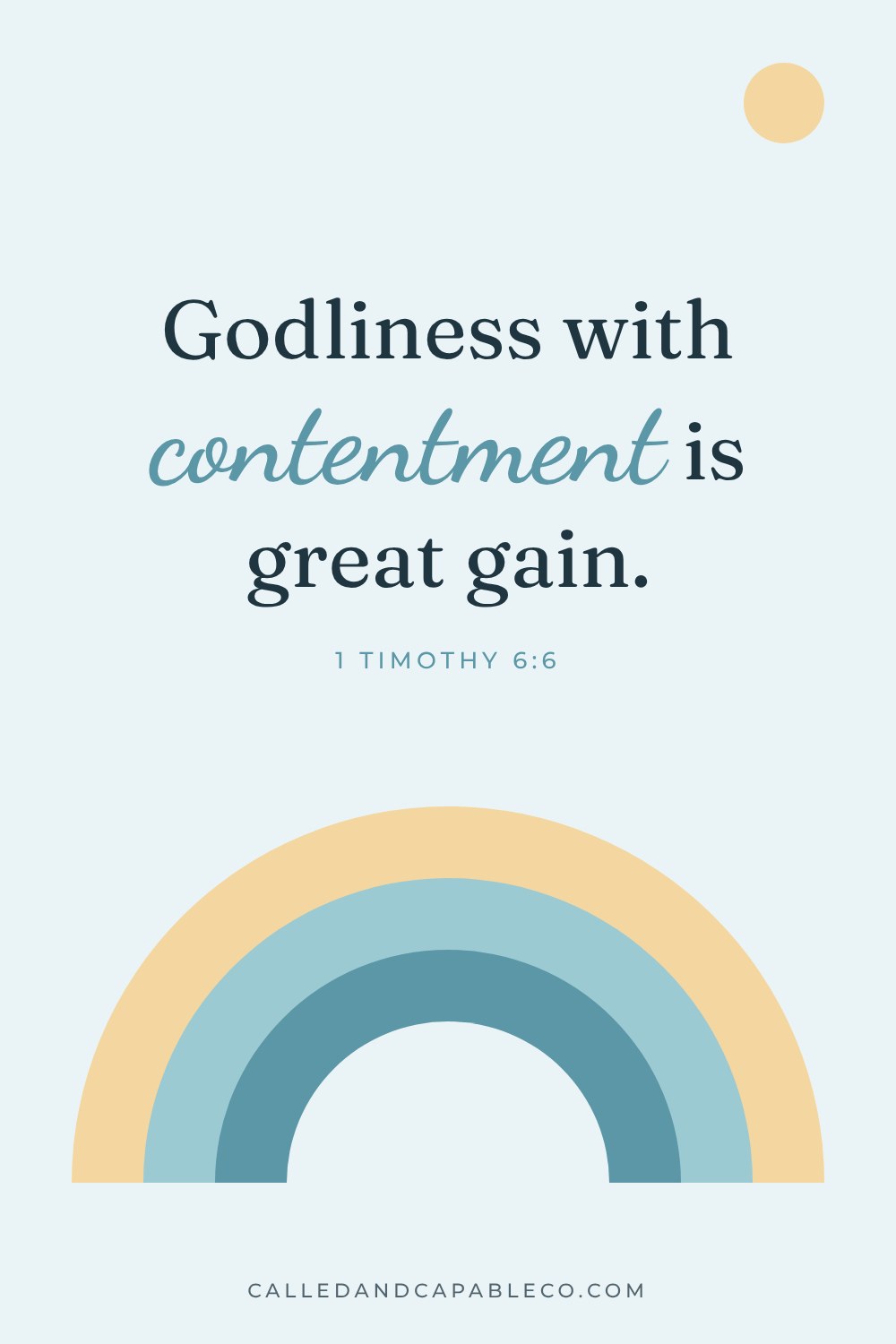
Godliness with contentment
But godliness with contentment is great gain, for we brought nothing into the world, and we cannot take anything out of the world.
1 Timothy 6:6–7
The greatest gain isn't a promotion, a business milestone, or a bigger paycheck. It's knowing God and being at peace with him. Everything else is temporary. We can't take our titles, salaries, or achievements with us.
That doesn't make career growth meaningless. It puts it in perspective.
Keep your life free from love of money, and be content with what you have, for he has said, "I will never leave you nor forsake you."
Hebrews 13:5
The reason we can be content is that God will never leave us. Whatever job we have or don't have, whatever title we hold or lose, he's there.
Holding both
So yes, you can work toward growth and be content today. You can set big goals and trust God with the outcome. You can be ambitious for God's glory and at rest in his love.
It looks like:
- Working diligently with your gifts
- Pursuing opportunities with open hands
- Celebrating others' success
- Being grateful for your current role
- Accepting closed doors as God's direction
- Finding your identity in Christ, not your career
That's the kind of ambition that honors God, and the kind of contentment that sets you free.
The Called & Capable Monthly membership, launching January 2027, brings one new 4-week Bible study to your inbox each month, about twelve minutes a day, with a Monday encouragement email and a weekly Reflection Guide. In the meantime, our free Monday Reset study is a great place to start.
Common questions
Is it wrong for a Christian woman to be ambitious?
No. Scripture warns against selfish ambition (Philippians 2:3) but praises skill, diligence, and using your gifts for God's glory and others' good.
What does Philippians 4:13 really mean?
In context, "I can do all things through him who strengthens me" is about contentment. Paul learned to be content in plenty and in need through Christ's strength.
Scripture quotations are from the ESV® Bible (The Holy Bible, English Standard Version®), © 2001 by Crossway, a publishing ministry of Good News Publishers. Used by permission. All rights reserved.